
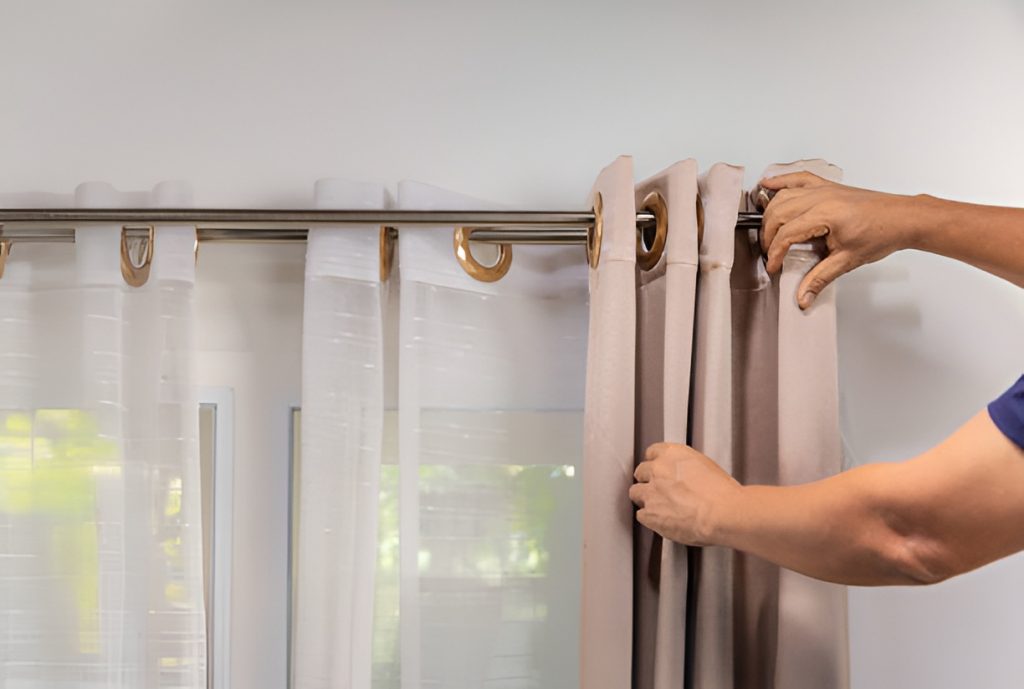
- Layering curtains adds style, privacy, and light control.
- Mix sheers with heavier fabrics for depth and versatility.
- Measure windows carefully and hang rods slightly above frames.
- Adjust layering for each room’s needs: living room, bedroom, office, or kitchen.
- Combine patterns, colors, and textures thoughtfully.
- Maintain layers with cleaning, steaming, and seasonal rotation.
- Avoid overcrowding and mismatched fabrics.
Layering curtains is one of the easiest ways to elevate your home’s style while adding function. Not only can layered curtains enhance the look of your windows, but they also help with privacy, light control, and even insulation. Whether you’re decorating a cozy bedroom, a bustling living room, or a sun-filled dining area, knowing how to layer curtains can transform your space.
In this guide, we’ll walk through everything you need to know about layering curtains, from choosing fabrics to hanging them with style.
Why Layer Curtains?
You might wonder, why go through the extra effort of layering curtains when a single panel could suffice? There are several reasons to layer your window treatments:
- Light control – Layering allows you to adjust natural light without sacrificing privacy. Sheers diffuse sunlight, while heavier curtains block it completely.
- Insulation – Adding a second layer of fabric can help keep your room warmer in winter and cooler in summer.
- Style and depth – Layering adds visual interest, dimension, and a polished look to any window.
- Versatility – You can mix and match patterns, textures, and colors to suit different moods or seasons.
Layering isn’t just functional—it’s an opportunity to make a statement in your home.
What You Need to Layer Curtains Successfully

Before you start hanging panels, you need to gather the right materials. Layering curtains requires careful planning to avoid a cluttered or heavy look.
Essential items:
- Sheer curtains for light filtering
- Opaque or blackout curtains for privacy and light blocking
- Curtain rods (single or double, depending on your layering style)
- Tiebacks or holdbacks to control the drape
- Hooks, rings, or clips for easy hanging
Tip: Consider your curtain hardware carefully. Double rods make layering much easier, while adjustable rods give you flexibility with different window sizes.
How to Layer Curtains Step by Step
Getting the layering right can feel intimidating at first, but it’s mostly about balance, proportion, and choosing the right combination of fabrics. Here’s a more detailed approach to make your curtain layers look polished and effortless:
1. Measure your windows carefully
- Start by measuring both the width and height of your window, including any molding or trim.
- Decide how much curtain fullness you want. For a lush, flowing look, your curtains should generally be 1.5 to 2 times the width of the window. This extra fabric ensures your curtains don’t look flat when closed.
- Consider the height placement: mounting the rod slightly higher than the window frame can make your ceilings feel taller and your room more spacious.
2. Choose your fabrics thoughtfully
- Begin with a lightweight sheer layer. Sheers diffuse sunlight softly, letting in natural light while maintaining daytime privacy.
- Select a heavier, opaque curtain for the second layer. Blackout or lined curtains are ideal for bedrooms, while thicker fabrics like linen, velvet, or cotton can add style and insulation.
- Think about blending textures and colors. For example, a smooth linen sheer paired with a patterned velvet curtain creates depth and visual interest without overwhelming the room.
3. Hang the sheer layer first
- Place your sheer curtain on the rod closest to the window. This layer should hang slightly past the window frame to ensure maximum coverage.
- Make sure the sheers drape smoothly—avoid tight gathers, which can make them look crowded.
- If you have multiple panels, consider overlapping them slightly to eliminate gaps.
4. Add the main curtain layer
- Hang your heavier curtain on the outer rod. Ensure it fully covers the window when closed but also allows the curtain to cascade elegantly when drawn back.
- Pay attention to proportion. Heavier fabrics should fall straight and smooth; puddling slightly on the floor can create a luxurious, dramatic effect in living rooms, while bedrooms often benefit from just brushing the floor.
5. Adjust the layering for balance
- Step back and assess how the layers look together. Check that the sheers aren’t fully hidden behind the heavier curtains when open.
- Use tiebacks or holdbacks to keep the curtains controlled and prevent the layers from crowding the window.
- Minor adjustments, like shifting panels slightly or fluffing folds, can make a big difference in how natural and stylish your layers appear.
How to Layer Curtains in Living Rooms
Living rooms typically have larger windows and a lot of natural light, making them perfect candidates for layered curtains. Done right, layers can enhance the style, function, and coziness of your space.
Tips for living room curtain layers:
- Combine sheer and heavy curtains – Sheers soften daylight while keeping your living room private. Heavy curtains can block sun glare and create a sense of intimacy in the evenings.
- Neutral sheers + bold outer curtains – For a modern aesthetic, pair a soft, neutral-colored sheer with patterned or textured outer curtains. This approach adds depth without competing with furniture or wall colors.
- Floor-length elegance – Curtains that reach the floor naturally draw the eye upward, creating height. For a luxurious feel, let the heavier layer puddle slightly at the bottom.
- Layer with shades – Adding a roman or roller shade beneath the curtains gives you additional control over light, perfect for media walls or sun-soaked living rooms.
Questions to consider:
- Do you want your curtains to be a focal point of the room, or a subtle complement?
- How much natural light should be maintained during the day? Decide if sheers alone suffice or if additional layers are needed for light blocking.
How to Layer Curtains in Bedrooms
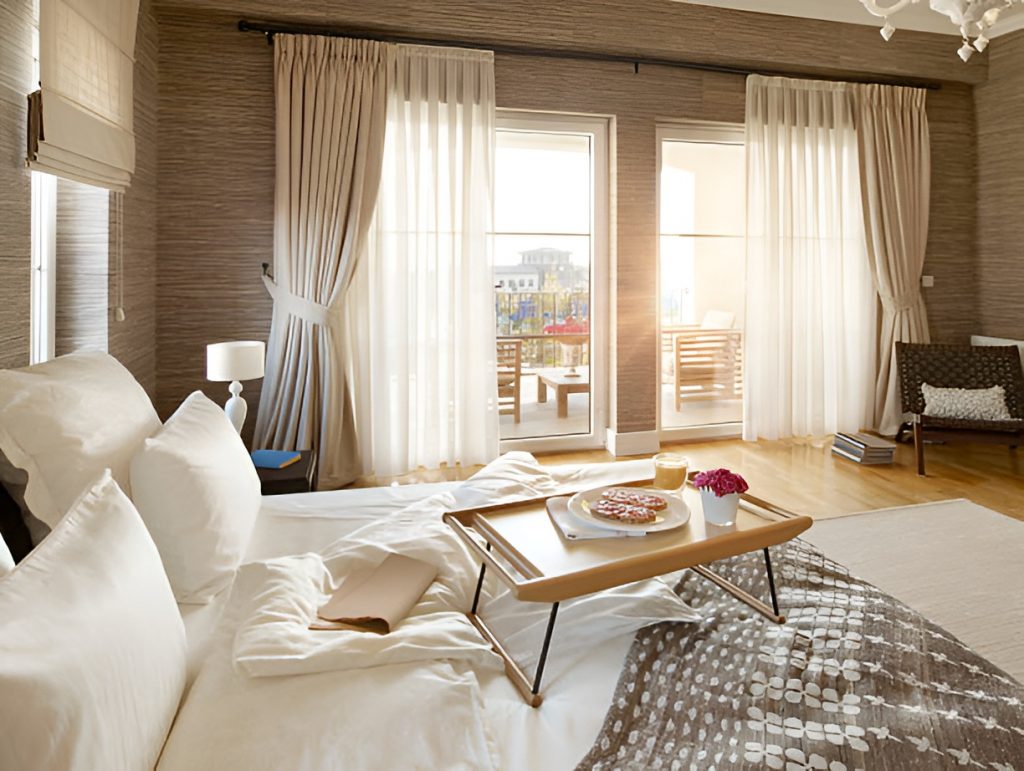
Bedrooms require a careful balance between style, privacy, and controlling natural light. Layered curtains are particularly useful here to create a calm and cozy environment.
Bedroom layering ideas:
- Blackout curtains as the main layer – These ensure uninterrupted sleep and can also improve insulation.
- Sheer underlayer – Sheers filter morning sunlight, creating a gentle wake-up light without exposing the room completely.
- Coordinated fabrics – Match your curtain layers to bedding, rugs, or furniture for a harmonious look. This helps the room feel thoughtfully designed.
- Heavier textures for warmth – Velvet, thick linen, or quilted curtains add both visual and tactile warmth to the bedroom.
Common questions:
- Should the curtains reach the floor? Almost always yes. Floor-length curtains create a polished, high-end feel and make small bedrooms look taller.
- Can I mix patterns in the bedroom? Yes, but keep it subtle. Combine small-scale patterns on sheers with larger patterns or solid colors on the outer layer for visual interest without chaos.
Layering Curtains in Other Spaces
Layering curtains isn’t limited to living rooms and bedrooms. Other areas of your home can benefit from this technique as well.
Dining rooms:
- Sheers can filter sunlight without completely blocking the view.
- Heavier drapes are perfect for dinner parties or when you want a more formal ambiance.
Home offices:
- Sheers reduce glare during the day, making it easier to work on screens.
- Layered blackout panels help create a focused environment for late-night work or video calls.
Kitchens:
- Lightweight fabrics or café-style curtains work best for small windows.
- Avoid heavy or floor-length curtains that can get in the way of cabinets, countertops, or cooking areas.
- Layer a patterned curtain over a simple sheer to add style without interfering with function.
Choosing the Right Fabrics for Curtain Layers
Your fabric choice can make or break the overall look of layered curtains. Consider the following popular combinations:
- Sheer + Linen – Adds softness and subtle texture without overwhelming the window.
- Voile + Velvet – Luxurious and elegant, ideal for living rooms or formal areas.
- Cotton + Blackout – Practical and cozy, perfect for bedrooms and kids’ rooms.
- Silk + Cotton – Adds shine, drape, and sophistication to any space.
Tips for mixing fabrics:
- Stick to a cohesive color palette to prevent clashing.
- Vary textures to create depth. For instance, pair smooth silks with rougher linens.
- Consider seasonal swaps. Lightweight, airy fabrics work for spring and summer, while heavier, insulated layers are perfect for winter.
How to Layer Curtains Without Overcrowding Your Windows
Layered curtains can look heavy or messy if not done thoughtfully. Here’s how to keep your windows looking stylish:
- Use slim, unobtrusive rods to avoid visual clutter when layering multiple panels.
- Keep the outer layer slightly wider than the window frame to ensure full coverage.
- Avoid overloading small rooms with too many bold patterns—simpler layers look cleaner.
- Let curtains hang naturally; avoid forcing pleats or folds that create unnecessary bulk.
- Use tiebacks to control fullness while maintaining a soft, flowing drape.
Common Mistakes When Layering Curtains
Even small errors can make layered curtains look awkward. Watch out for these pitfalls:
- Hanging curtains too short or too long.
- Using fabrics that are too similar in weight, which can look flat.
- Crowding rods with too many layers.
- Forgetting to account for furniture placement near windows.
- Neglecting window function—make sure the layers can still open and close easily.
How to Mix Patterns and Colors in Layered Curtains
Layering curtains gives you an opportunity to bring personality and style into your space, but mixing patterns and colors can feel intimidating. The key is balance and cohesion.
Best practices for mixing patterns and colors:
- Start with a neutral sheer as the base – Choose a solid-colored or lightly textured sheer in a neutral shade. This creates a calming backdrop that allows the outer layer to shine without competing visually. For example, a white or cream sheer works with almost any room palette.
- Add a patterned outer curtain using accent colors – Pick one or two colors from your room’s existing decor, such as a rug, throw pillows, or wall art, and feature them in your patterned curtain. Geometric prints, subtle florals, or classic stripes work well as long as the colors harmonize with the rest of the room.
- Keep patterns proportionate to the room size – In smaller spaces, large, bold patterns can feel overwhelming. Instead, choose subtle or medium-scale prints. In larger rooms, you have more freedom to use bigger patterns and richer colors to make a statement.
- Incorporate texture for depth – Mix different fabric textures to add visual interest without introducing more patterns. For instance, pair a smooth cotton or silk curtain with a velvet or linen outer layer. Textures catch light differently, which creates depth and a layered effect without feeling cluttered.
- Consider seasonal swaps or rotations – For example, swap darker, richer patterns in the fall and winter for lighter, airier prints in spring and summer. This keeps the room feeling fresh and aligned with the season.
Tip: Use the 60-30-10 rule for color balance: 60% of the dominant color (often the sheer), 30% secondary color (patterned curtain), and 10% accent (decor items). This keeps the overall look harmonious.
How to Maintain Layered Curtains
Once you’ve carefully layered your curtains, regular maintenance is essential to keep them looking polished and extending their lifespan.
1. Regular cleaning
- Sheers – Most sheers can be machine washed on a gentle cycle. Use cold water and mild detergent to prevent shrinking or color fading.
- Heavier curtains – Fabrics like velvet, silk, or blackout-lined curtains may require dry cleaning. Always check the care label before washing.
2. Dusting and spot cleaning
- Vacuum curtains regularly using a soft brush attachment to remove dust and pet hair.
- For spot cleaning, lightly dab stains with a damp cloth and mild detergent. Avoid rubbing, which can damage fibers.
3. Ironing or steaming
- Iron heavier fabrics on low to medium heat if needed, using a pressing cloth to prevent scorch marks.
- For delicate fabrics, use a handheld steamer to remove wrinkles while preserving the texture of the material.
4. Rotate layers seasonally
- Switch heavier fabrics in and out depending on the season to optimize insulation and refresh your room’s appearance. For example, use light cotton layers in summer and thick linen or velvet layers in winter.
- This rotation also helps prevent fabric wear in frequently used areas and keeps the curtains looking new longer.
5. Adjust pleats and folds
- Periodically straighten folds and adjust tiebacks to maintain a neat, structured look. Even subtle shifts in curtain alignment can make a big difference in the room’s overall appearance.
Pro Tip: For long-term care, consider installing curtain liners under decorative panels. Liners protect fabrics from sunlight damage and reduce fading over time, especially in rooms with strong natural light.
In Closing
Layering curtains is a blend of style and function. With the right fabrics, hardware, and attention to detail, your layered curtains can elevate any room, whether it’s a bright living room, cozy bedroom, or functional office. Remember to:
- Mix textures and fabrics thoughtfully.
- Ensure proper rod placement for smooth draping.
- Balance patterns, colors, and room scale.
- Consider seasonal and functional needs.
Once you master layering, curtains are no longer just window coverings—they become a key design element that adds warmth, personality, and versatility to your home.
