
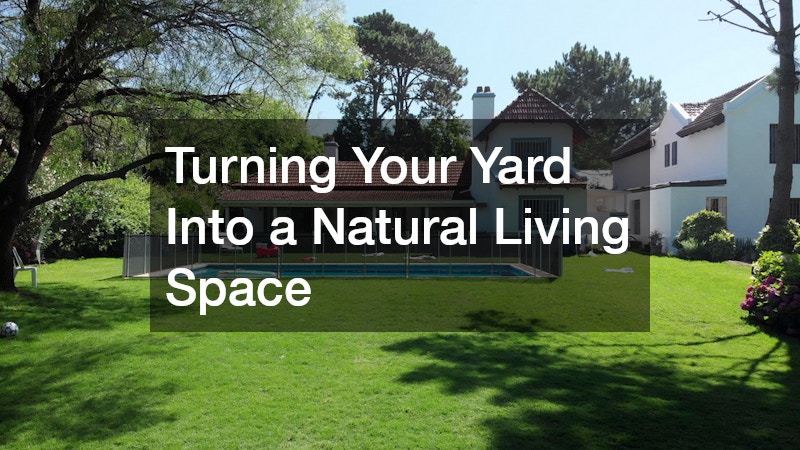
For decades, the traditional American backyard was defined by a simple, monochrome expanse of carpet-like green turf bordered by rigid fences. While neat, these uniform lawns often required endless weekend maintenance, massive volumes of water, and synthetic treatments, yielding a static space that offered little true usability or connection to nature. Today, a major shift is underway in residential outdoor design. Homeowners are increasingly looking to transform underutilized backyards into dynamic, natural living spaces—environments that seamlessly merge the comforts of interior home design with the organic, restorative beauty of the outdoors.
Creating a natural outdoor living space is rooted in the principle of biophilic design, which seeks to satisfy our innate human desire to connect with natural systems. Rather than forcing nature into rigid geometric constraints, a biophilically designed yard works in harmony with the local landscape. It uses organic shapes, sustainable regional materials, multi-layered native vegetation, and intentional outdoor rooms that encourage cooking, dining, lounging, and quiet reflection under the open sky.
Stabilize Slopes and Terrace Soil to Create Structural Depth
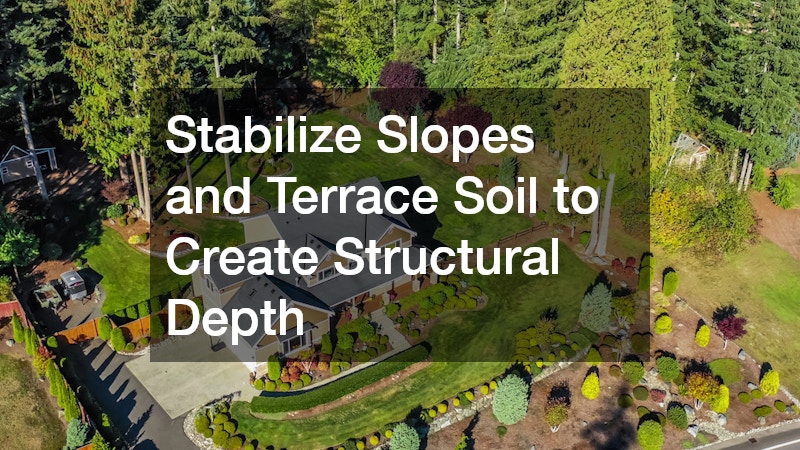
Unstable, sloped, or uneven terrain is one of the most common obstacles to creating an enjoyable outdoor living space. Steep gradients not only render large portions of a yard practically unusable for furniture or recreation, but they also accelerate soil erosion and create water pooling issues near home foundations during heavy rains. To convert a challenging grade into functional, welcoming living areas, you must first address subterranean stability and earth retention through strategic terracing.
Terracing transforms a continuous, unmanageable slope into a series of stepped, flat plateaus. Each level can be customized for a specific purpose—such as an upper dining deck, a mid-level fire pit lounge, and a lower natural garden bed. Creating these stable structural steps requires engineered barriers capable of holding back immense weight while allowing groundwater to drain naturally.
- Assess natural site drainage: Before moving earth, map how rainwater moves across your property during heavy storms to prevent inadvertently directing runoff toward your foundation or neighboring lots.
- Integrate natural stone barriers: Utilizing heavy dry-stacked fieldstone, split granite, or modular masonry blocks for retaining walls provides crucial structural resistance while adding rich, earthy textures to the landscape.
- Design for integrated functionality: Incorporate built-in stone bench seating, wide access steps, or terraced planter boxes directly into your wall design to maximize space efficiency.
- Incorporate subterranean drainage: Always lay perforated drain pipes and washed aggregate behind structural barriers to prevent hydro-static pressure from building up and causing wall failure over time.
While minor, low-rise garden borders can often be handled as DIY projects, severe slopes and tall structural terracing require heavy machinery and deep structural engineering. Ground stability starts far below the visible surface; properly setting a grade demands deep excavation, compacted crushed-stone sub-bases, and exact level calculations.
For complex projects involving significant site excavation, soil retention, or high-load pads, hiring professional concrete services guarantees that structural footings are poured to exact local code specifications. Reinforced subterranean pilings and properly cured footings provide a rock-solid foundation that resists freeze-thaw soil movement, ensuring your elevated terraces and stone walls remain level, safe, and beautiful for decades to come.
Establish Permeable Patios and Organic Pathways for Flow
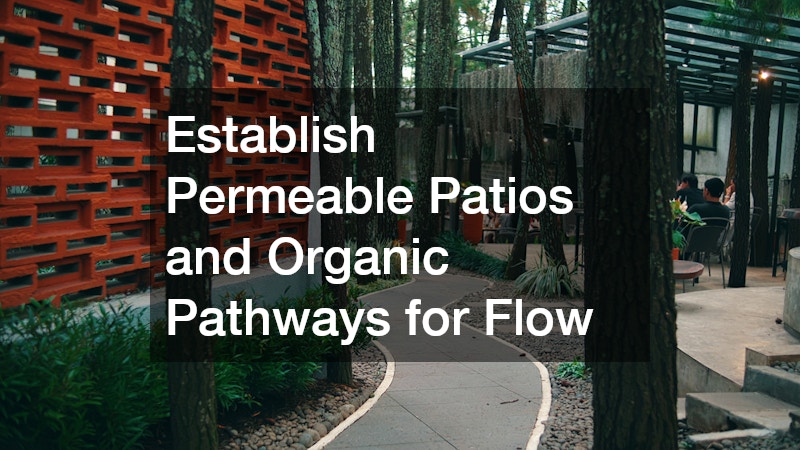
Once the foundational elevation and soil stability are established, the next phase in crafting a natural living space is defining your primary gathering zones and circulation pathways. Standard poured asphalt or massive unbroken slabs of grey concrete can make an outdoor area feel cold and commercial. To maintain a soft, biophilic aesthetic, hardscape elements should mimic the fluid forms found in natural environments.
Instead of drawing straight, 90-degree walkways that force rigid movement, design gently curving pathways that wind through plant beds and guide visitors naturally through your yard. For patio spaces, choose materials that offer textural warmth and organic color variations, such as slate, natural flagstone, thermal bluestone, or permeable concrete pavers. Permeable paving systems are particularly advantageous because they allow rainwater to sink through the joints directly into the ground beneath, filtering pollutants naturally and preventing surface water buildup.
- Design distinct outdoor zones: Establish designated “outdoor rooms” by changing the paving patterns, textures, or edge treatments between dining areas, kitchen modules, and fire lounges.
- Prioritize curvilinear lines: Use swept, sweeping curves for patio edges and garden paths to create a relaxed, organic feel that breaks up the square lines of your home’s architecture.
- Incorporate soft joints: Fill the gaps between large flagstone pavers with low-growing ground covers like creeping thyme, Irish moss, or crushed pea gravel to soften hard edges.
- Optimize solar orientation: Position primary seating areas to take advantage of natural shade patterns from mature trees or existing structures during hot summer afternoons.
Bringing an organic hardscape vision to life requires balancing aesthetic creativity with precise engineering. Hardscape elements must withstand weather swings, heavy foot traffic, and potential ground settling without cracking or becoming trip hazards.
Working alongside experienced local landscapers allows you to choose regional stone options that naturally complement your local environment while ensuring proper site grading and plant placement. Furthermore, when laying heavy load-bearing bases for masonry hearths, permanent outdoor kitchens, or heavy flagstone patios, partnering with professional concrete contractors ensures that sub-base excavation, rebar reinforcement, and expansion joints are calculated correctly. Proper installation protects your investment from settling, shifting, or water damage over time.
Define Living Perimeters with Seamless Privacy and Boundaries
A truly functional natural living space should feel like an intimate, secluded sanctuary where you can unwind away from the eyes of neighbors and the noise of surrounding streets. However, achieving privacy does not mean you have to build high, stark security walls that feel oppressive or industrial. The goal is to blend physical structural boundaries with lush, living green screens to create a cozy, sheltered retreat.
A balanced perimeter design pairs physical fencing materials with strategic vegetative layering. Wood, composite, and metal materials can be styled to feel remarkably modern and natural. For example, using warm cedar or redwood boards arranged horizontally creates an sleek, contemporary backdrop that visually widens the footprint of your yard. Dark charcoal or matte black metal posts can also blend into shaded property lines, letting surrounding greenery take center stage.
- Combine hard and soft barriers: Install structural perimeter panels as a primary backdrop, then layer tall bamboo, tall ornamental grasses, or evergreen shrubs directly in front to soften the boundary.
- Utilize living green walls: Install sturdy wooden or wire trellises along property lines to support flowering climbing vines like clematis, sweet autumn clematis, or native honeysuckle.
- Choose sustainable wood options: Choose naturally rot-resistant lumbers like Western Red Cedar, Redwood, or heat-treated thermally modified woods that require minimal chemical staining.
- Incorporate acoustic dampening: Use thick, overlapping wood fence designs combined with broad-leafed evergreen hedges to absorb neighborhood street noise and muffle unwanted sounds.
Installing a perimeter structure along uneven ground, heavy soil, or mature tree root zones presents significant installation challenges. Proper post hole digging, local zoning compliance, and precise alignment are critical to ensuring your perimeter remains plumb and sturdy through high winds and storms.
Consulting with a licensed fence company helps clarify property boundary lines, local height restrictions, and underground utility locations before any digging begins. Whether you choose custom horizontal timber slats, full privacy panels, or decorative open-grid lattice, engaging a dedicated fencing service guarantees that support posts are set deeply below the local frost line in solid concrete footings. Professional construction prevents post sagging, gate misalignment, and premature wood rot, keeping your private oasis secure for years.
Cultivate Canopy Layers, Native Plants, and Eco-Friendly Turf
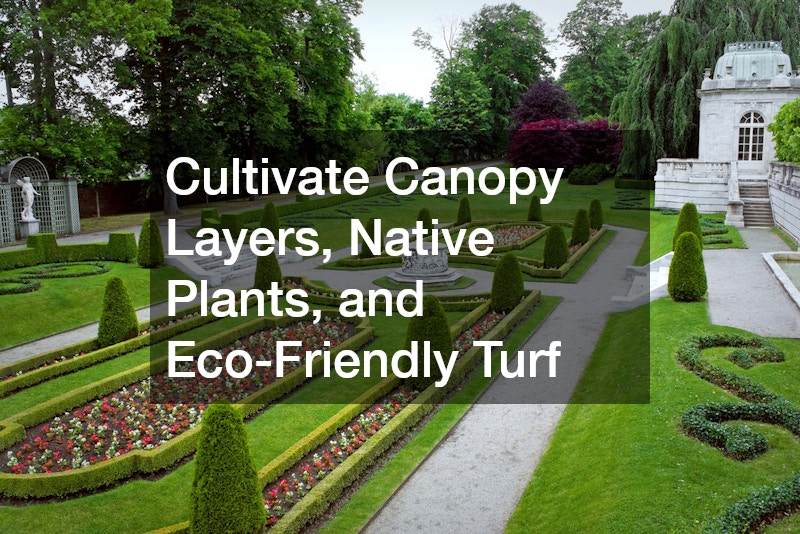
With your hardscape structures and privacy perimeters secure, you can focus on the heart of your natural outdoor living space: the living plant ecosystem. A common mistake in residential landscaping is relying on imported exotic plants that require intense watering, frequent fertilizing, and constant chemical intervention to survive. A true natural yard prioritizes regional flora and multi-tiered plant canopy layers that thrive in local climate conditions.
To build a balanced, self-sustaining garden ecosystem, design your planting beds using a multi-tiered structure modeled after natural forest edges. Start with a top canopy of mature shade trees, add an understory tier of small flowering trees and large shrubs, layer mid-height perennials and ornamental grasses beneath, and finish with a rich ground cover layer. Prioritizing plants native to your specific hardiness zone provides essential nectar and habitat for native pollinators, birds, and beneficial insects while keeping maintenance manageable.
- Prune for sunlight filtration: Thin out dense upper branches of large shade trees to allow warm, dappled sunlight to reach lower patio areas and understory garden beds.
- Group plants by water needs: Practice hydrozoning by placing drought-tolerant species together in dry zones and water-loving plants near natural drainage collection points.
- Replace high-maintenance turf: Reduce large, thirsty lawn areas by converting underutilized turf zones into native wildflower meadows, clover lawns, or wide wood-chipped garden beds.
- Mulch with organic matter: Apply a 3-inch layer of shredded hardwood mulch or bark over garden beds to suppress weed growth, retain soil moisture, and nourish beneficial soil microbes.
Maintaining healthy vegetation requires balancing natural growth with proactive care. Oversized, unmaintained trees can pose structural safety risks to nearby patios and homes during severe windstorms, while invasive weeds can quickly choke out delicate native plant beds if left unchecked.
Partnering with certified tree services ensures that mature canopy trees receive proper hazard pruning, crown thinning, and deep-root fertilization to stay healthy and structurally sound. To protect your garden beds and ground cover spaces from being overrun by aggressive invader species, bringing in specialized weed control services offers targeted, eco-conscious management strategies. Modern targeted treatments manage noxious weeds at the root level without contaminating surrounding soil or endangering native insect populations.
Layer Low-Voltage Illumination and Infrastructure for Evening Comfort
A thoughtfully designed natural living space should not become unusable the moment the sun goes down. In fact, dusk and nighttime offer unique opportunities to experience your yard in an entirely new light. By integrating warm, low-voltage outdoor lighting and safe outdoor electrical infrastructure, you can extend your time outside well into the night, creating a warm, magical ambiance perfect for late-night family conversations or evening dinner parties.
The key to lighting a natural landscape is subtlety; avoid high-intensity floodlights that wash out natural textures and create harsh, blinding glare. Instead, employ a layered lighting scheme using warm LED temperatures (between 2700K and 3000K). Warm light enhances the natural tones of stone, wood, and plant foliage while creating a cozy, inviting atmosphere. Diffuse pathway lights guide footsteps safely along stone walkways, while subtle up-lighting angled into the canopy of large trees accentuates bark texture and leaves, casting mesmerizing branch shadows across patios below.
- Utilize subtle accent lighting: Hide small light fixtures behind boulders, low shrubs, or seat walls to illuminate surfaces indirectly without exposing the bare light source.
- Focus on functional task lighting: Install bright, warm downward task lights over outdoor kitchen counters, grill stations, and step risers to ensure safety during nighttime cooking and navigating steps.
- Implement smart controls: Connect your outdoor lighting system to smart transformers, twilight sensors, and dimmers, allowing you to easily adjust ambient light levels directly from your smartphone.
- Respect dark-sky principles: Angle fixtures downward and use shielded shrouds to minimize light pollution, protecting night-sky visibility and preventing disruption to local nocturnal wildlife.
Because outdoor utilities must endure harsh weather, freezing temperatures, and constant ground moisture, safety and code compliance are non-negotiable when installing outdoor electrical infrastructure. Running subterranean power lines requires specialized moisture-rated wiring, deep trenching, and protective conduit sleeves to eliminate electrocution and fire risks.
Working with experienced lighting companies helps you choose commercial-grade, weatherproof brass or copper fixtures that resist corrosion and age gracefully over time. For the heavy utility work—such as digging utility trenches, installing GFCI safety outlets, setting up sub-panels for heaters or hot tubs, and connecting low-voltage transformers—relying on licensed electrical services ensures your entire system is installed in compliance with national and local electrical safety codes. Safe, clean power distribution keeps your outdoor haven fully operational and worry-free.
Transforming a generic lawn into a natural outdoor living space is a deeply rewarding journey that redefines how you interact with your home and environment. By taking a comprehensive approach—addressing soil retention, creating permeable flagstone gather spaces, enclosing perimeters with natural privacy panels, nurturing native canopy layers, and illuminating the landscape with warm evening lighting—you create a seamless outdoor sanctuary that grows more beautiful with each passing season.
You do not need to execute every phase of this outdoor transformation overnight. Many homeowners find immense satisfaction in taking a staged approach: starting with foundational hardscape terracing and patio creation in season one, adding perimeter privacy and rich plant layers in season two, and perfecting nighttime ambient lighting and outdoor power infrastructure in season three. By prioritizing sustainable materials, native biological diversity, and high-quality structural execution, your redesigned yard will become more than just an attractive home feature. It will serve as an inviting, restorative extension of your daily life—a living space where family and friends can reconnect with nature and each other for years to come.
